
Electric vehicles have taken the automotive industry by storm as the United States aims to lower transportation emissions. However, while these efficient vehicles utilize cutting-edge technologies and deliver impressive results, some components remain prone to vibration failure.
1 Fasteners
High-frequency vibrations from EV motors can result in standard fasteners loosening, which may cause significant malfunctions in battery modules and powertrains or result in complete system failure. In a worst-case scenario where the fasteners detach, drivers may find themselves in a serious car accident.
The use of high-quality materials when manufacturing fasteners, combined with proper installation and vibration testing, is crucial to ensuring reliability and safety.
2 Battery Pack and Housing
The battery pack is the heart of an EV, but it is a particularly heavy component that is susceptible to vibrational damage. Vibrations can impact the battery’s internal cells, reducing its lifespan and performance, or even cause short-circuiting and fires. The electrical connections may also loosen or crack, causing intermittent power loss.
The good news is that battery failure rates were only 0.1% in 2023, equivalent to one in every 1,000 EVs. However, the industry must decide whether to further enhance these mechanisms by 2030.
3 Electric Motor
High torque and rapid fluctuations in electric motors can create intense vibrations, resulting in wear on the motors’ rotor systems, sensor malfunctions and damage to the copper windings.
According to one study, bearing defects have approximately a 40% failure rate and are the most common issue and direct result of mechanical stress and vibration. A 28% to 36% failure rate in stators also results in reduced efficiency and accelerated degradation of insulating materials.
4 Suspension System
Kevin Heaslip, professor and director of the University of Tennessee’s Center for Transportation Research, says that EVs are 30% heavier than gas-powered cars due to the weight of their batteries.
The additional weight can induce more stress on the suspension system, resulting in an uncomfortable ride in the passenger cabin and premature wear on bushings and shocks. This could lead to loss of control of the EV and an increased risk of collisions.
5 Power Electronics
The power electronics controls, which direct the electric flow from the traction battery, are essential for regulating the speed and torque of the electric traction motor.
Vibration may loosen or damage the connections to the circuit boards, causing minor glitches or total power loss. A loose power connection may induce arcing, which generates a significant amount of heat and increases the risk of fire.
What Are the Best Vibration Testing Equipment Suppliers in the US?
The best vibration testing equipment suppliers in the .S can ensure your EV component functions with the utmost performance, reliability and safety. The following suppliers are worth considering.
Team Corporation
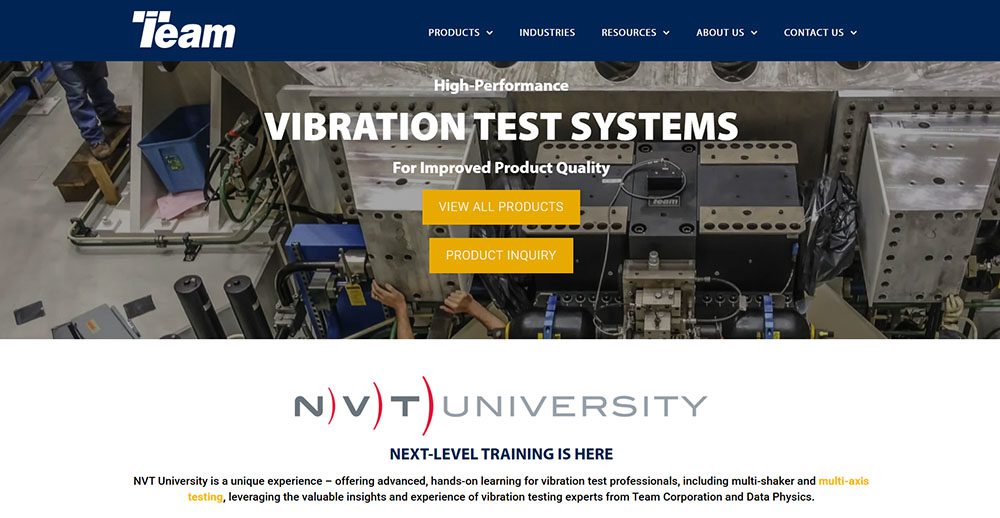
Team Corporation manufactures high-performance vibration test systems for the automotive industry. Among its offerings are high-frequency hydraulic systems of vertical, horizontal and advanced multi-axis testing, as well as rotary and acoustic sound generation.
These tests are designed to ensure durability, safety compliance, quality assurance, and readiness for both pre- and postproduction. Through its partnership with Data Physics, Team Corporation also offers hands-on professional training that covers complex testing topics.
Key Features
- Expertise in robust hydraulic systems, which is ideal for heavy EV components
- Specialize in multi-axis systems with advanced, realistic simulations
- Adheres to high reliability and safety standards for EV parts
- Customized vibration test solutions and fixtures for unique EV architectures
ETS Solutions
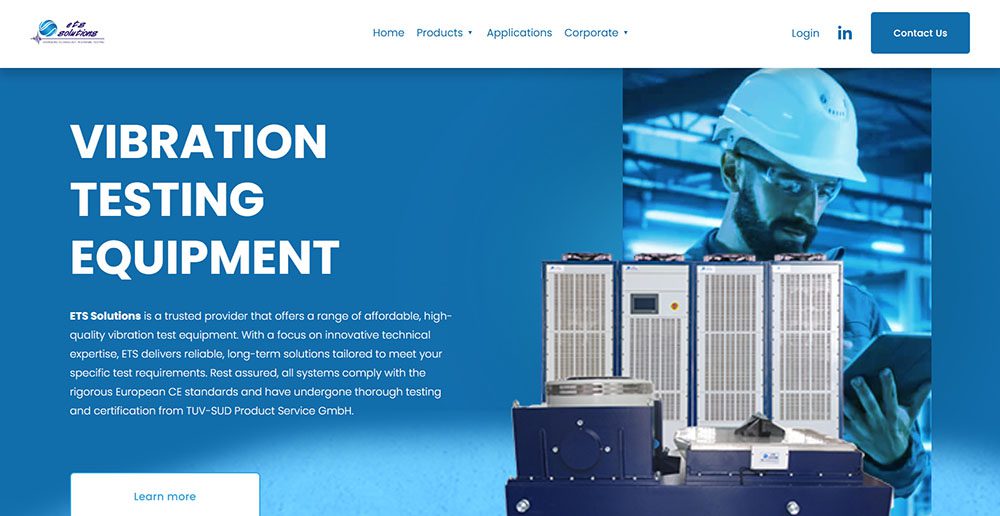
ETS Solutions is another qualified supplier of vibration testing equipment that tailors its turnkey systems to meet your specific needs. All of its equipment meets requirements set by the International Safe Transit Association, ASTM International, International Organization for Standardization (ISO) and military standards of the U.S. Department of Defense.
Whether you need electrodynamic shakers and exciters or vibration control software and hardware equipment, ETS Solutions can supply the necessary mechanisms and accessories.
Key Features
- Delivers complete turnkey testing packages
- Offers high-payload and custom fixturing solutions for heavy EV components
- Proven automotive and EV battery experience
- Emphasizes total system integration for EV testing protocols
CentraTEQ
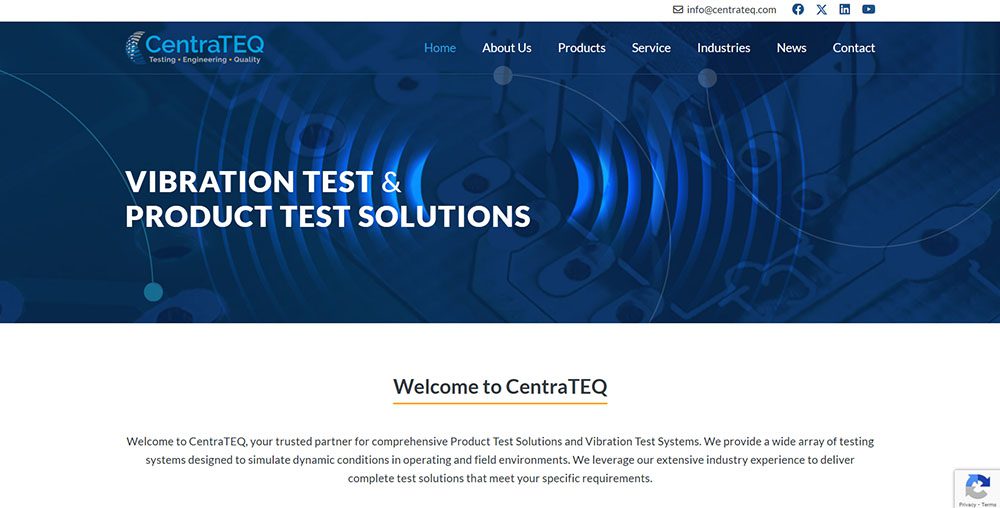
CentraTEQ delivers highly specialized vibration testing solutions for the automotive industry. The systems simulate the vehicle’s life cycle of stress, shock and real-world conditions to guarantee reliability and safety.
The solutions check can evaluate durability, vibration and harshness, electronics and sensors, autonomous driving systems and combined environmental testing. You can also adapt its equipment to meet your specific requirements, including those of SAE International and ISO standards.
Key Features
- Supplies wide-ranging simulation testing equipment with EV capabilities
- Offers flexibility in sourcing testing components from various suppliers
- Specializes in integrated systems
- Manages the entire life cycle of a project
Choosing the Best Vibration Testing Equipment Suppliers for EVs
Any company in the EV space must choose the best vibration testing equipment suppliers in the U.S. to ensure components can withstand real-world vibrations, meet strict compliance requirements and retain brand reputation in a competitive market. The following criteria are key to finding and fostering an ideal, long-term partnership.
| Technical Capabilities | Equipment must be capable of replicating high vibrational profiles found in EVs, including their shaker performance, controllers and software, and system integrations. |
| Experience | Work with a vendor that has specific EV expertise and knowledge, including key industry standards, battery testing experience and fixturing for heavy EV components. |
| Reliability | Before entering a business partnership with a vibration testing supplier, understand its market reputation and longevity, whether the company is financially stable for long-term service and support, and if it operates globally. |
| Support | Ensure the supplier provides comprehensive installation and training for your engineers and technicians. Also, inquire about after-sales support, including calibration, maintenance services and other testing challenges. |
| Cost | Compare the initial costs of the equipment versus the total cost of ownership. Factor in energy consumption, maintenance and spare parts costs over their lifespan, and facility needs. Additionally, inquire about the warranty terms and coverage. |
Ensuring Reliability from Component to Vehicle
Partnering with a reliable supplier of EV vibration testing equipment is crucial for manufacturing and distributing durable, safe transportation solutions. You must work with the best if you hope to remain competitive in a rapidly saturating market.
from Charged EVs https://ift.tt/XMJ2OiT


No comments:
Post a Comment