
The UK government recently announced £1 billion in new funding to support the deployment of zero-emission trucks and vans, targeting both vehicle and charging infrastructure costs.
Energy and infrastructure specialist VEV called the funding “a significant and welcome step for the industry,” but noted that it might not be enough to convince operators to make the leap to fully electric fleets.
VEV develops EV charging infrastructure and integrated energy systems for fleet operators, transport providers and local authorities. Its VEV-IQ platform is designed to help operators monitor, optimize and manage depot energy use.
“This funding is a positive step, but it doesn’t remove the core challenge facing fleet electrification,” said Mike Nakrani, CEO of VEV. “The issue isn’t upfront cost—it’s the complexity of making electric fleets work operationally at scale. The focus now needs to shift from funding vehicles to delivering integrated charging and energy solutions that actually work in the real world. At the moment, industry just isn’t seeing that happening.”
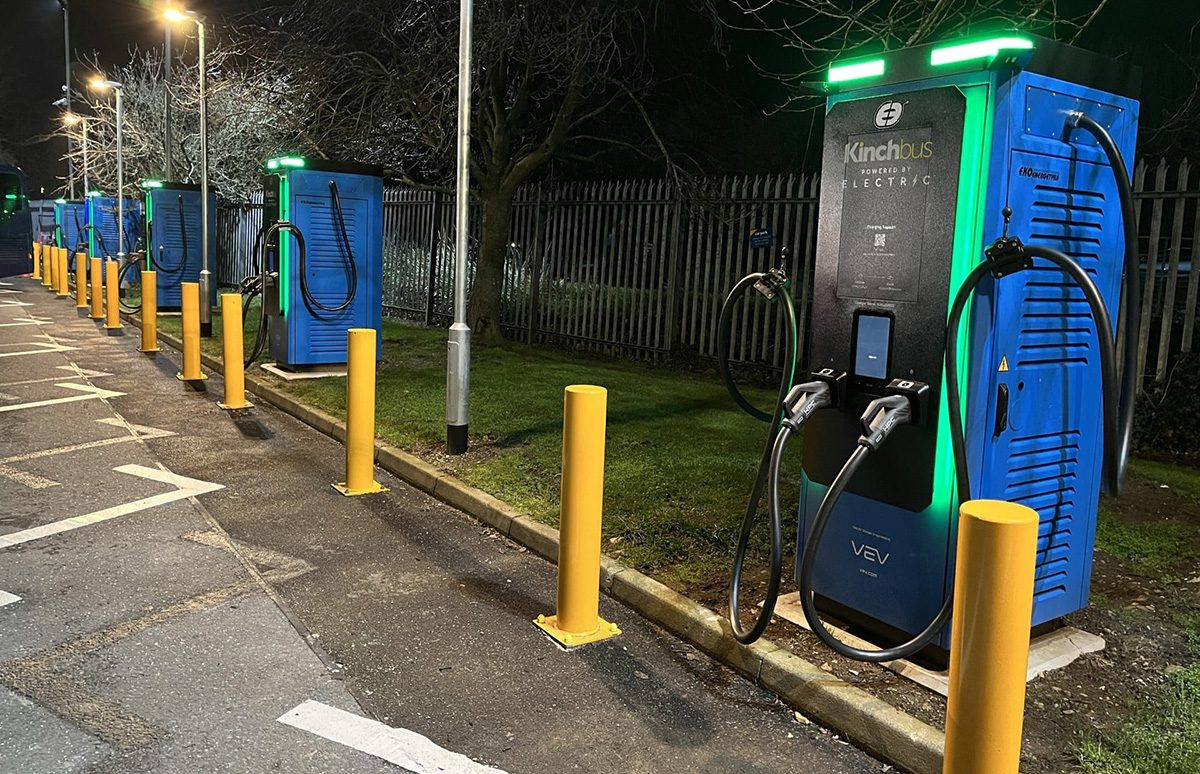
Commercial fleets typically operate predictable routes and schedules, and vehicles spend long periods parked at depots between shifts. This dwell time creates opportunities for managed charging, allowing operators to stagger energy demand, reducing electricity costs and easing pressure on local electrical grids.
Projects such as Stagecoach’s electrified depot in Chesterfield, England, which supports 57 electric buses and incorporates solar generation, demonstrate how integrating smart charging with on-site energy systems can help fleets manage power costs while improving operational flexibility.
As VEV points out (and as many in the EV charging industry have told Charged), right-sizing charging infrastructure and implementing managed charging can often enable fleet operators to support more vehicles using smaller grid connections than nameplate power capacities might indicate.
Fleet electrification could also play a wider role in supporting local electrical grids. Because charging demand can be managed and scheduled, EV charging depots can absorb surplus renewable generation when supply is high and reduce demand during periods of high demand.
“As the electricity system becomes more reliant on renewable energy, flexible demand will become increasingly valuable,” said Nakrani. “Commercial fleets are one of the few energy loads that can provide that flexibility at scale.”
Source: VEV
from Charged EVs https://ift.tt/FAfro5Y




No comments:
Post a Comment